Challenge:
Our client was being penalized and did not have a predictable model for forecasting contact demand. The business lacked the ability to understand how many agents were needed to meet demand, but moreover, what were the accurate shifts needed, accounting for growth/detraction factors beyond the standard Erlang model used today.
About:
Client: Healthcare Organization with around 25,000 contacts (customer interactions) per month
Channels Supported: Voice | Chat | Email
Solution:
serviceMob worked with our customer to rationalize and understand their service operation capabilities as it pertained to WFM (Workforce Management). Our customer was utilizing software based on the standard Erlang-C model to predict traffic/agent line requirements for their Voice Channel.

Erlang-C is based on the assumption that the incoming call rate follows a Poisson distribution and that the length of each call follows an exponential distribution.
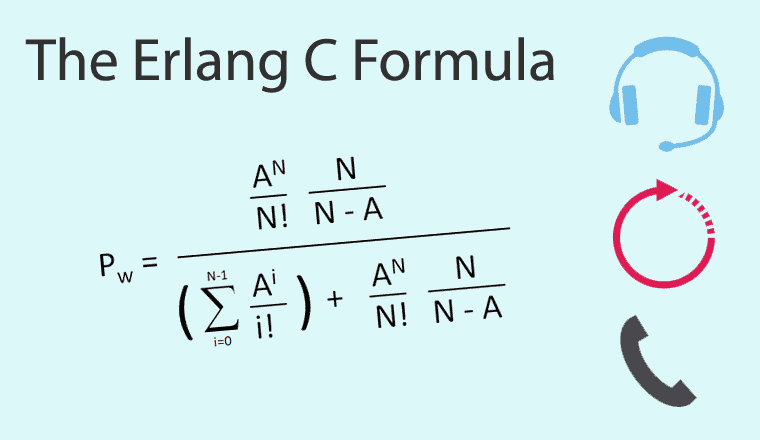
The model takes into account the average call duration, the call arrival rate, and the number of agents in order to calculate the probability that a call will be answered in a certain amount of time (e.g. within 20 seconds).
The model (Erlang-C) takes into account the average call duration, the call arrival rate, and the number of agents in order to calculate the probability that a call will be answered in a certain amount of time (e.g. within 20 seconds).
However, Erlang-C is not equipped to forecast demand based on drivers such as growth or detraction, as it is primarily concerned with predicting the number of agents/contacts needed to handle a given volume of calls. It does not account for factors such as changes to the customer base, changes to product lines, or intensive marketing tactics, which can all affect the demand for contact centers.

However, Erlang-C is not equipped to forecast demand based on drivers such as growth or detraction, as it is primarily concerned with predicting the number of agents/contacts needed to handle a given volume of calls.
Additionally, Erlang-C does not take into account repeat contact demand, as it is based on the assumption that each call is independent of the others. This means that the model is not well-suited for predicting demand of customer service and support centers in growth stage businesses, where changes to the customer base and product lines may lead to an increase in contact demand.

Moreover, the additional improvement of precision in forecasting accuracy for mature contact centers or businesses with stable queues still shows promise for improvement, given the above-mentioned issues which plague WFM teams. Using our proprietary methodology and algorithms, we were able to reduce the recommended headcount significantly.
Using our proprietary methodology and algorithms, we were able to reduce the recommended headcount significantly.
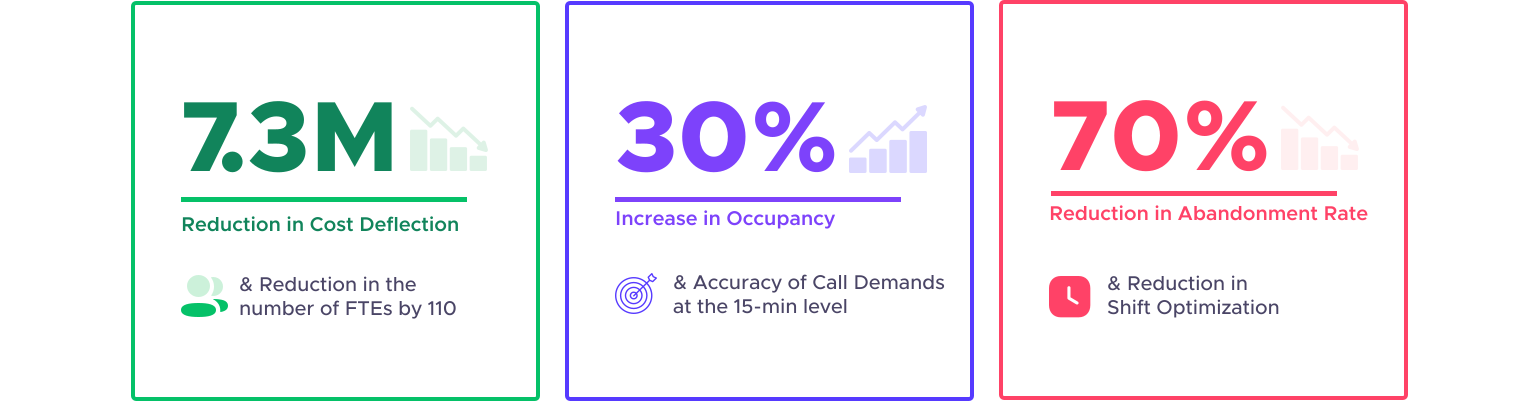
With greater precision of forecasting, serviceMob then initiated our SHOP (Shift Optimization Pattern), identifying what were the recommended shifts given the new forecast and what was the optimized schedule vs. the incumbent schedule, which was based on a generalized Erlang-C pattern. In conjunction with accounting for repeat contacts, growth, and using real-world data based on agent performance and customer wait tolerance, we were able to deflect over $7M in cost savings.

In conjunction with accounting for repeat contacts, growth, and using real-world data based on agent performance and customer wait tolerance, we were able to deflect over $7M in cost savings
Regardless of the systems utilized, no matter the channels supported, or the technology franken-stack you have – serviceMob can ensure you have the analytics needed to make better/faster decisions about your contact center.
Results: